


Imagine you’ve just hit a major milestone. Your business has expanded from three to fifteen locations. Suddenly, the simple tactics that worked yesterday are failing today. You’re missing Google Business Profile updates, and your local rankings are slipping in key regions. This is the “multi-location trap.”
It’s the point at which manual effort no longer works. You need a real local SEO strategy that can grow as fast as your revenue. By reading this article, you’ll learn the core differences between building an internal team and hiring an agency. We’ll break down costs, speed, and logistics for managing local SEO services at scale.
We want to give you the most important information first. If you need to move fast, an agency is usually the winner. If you need total brand control, in-house is the path. We’ll explore why scalability is the only metric that truly matters for your growth.
Highlights
- Scaling local SEO services breaks down once you expand past a few locations, because managing Google Business Profiles, reviews, citations, and local rankings multiplies with every new market.
- Agencies scale faster than in-house teams thanks to ready-made tools, proven playbooks, and existing link-building and citation systems that eliminate hiring and training delays.
- In-house local SEO teams offer deeper brand and compliance control, which matters most in YMYL or highly regulated industries, but they scale more slowly due to recruitment bottlenecks.
- Time-to-value strongly favors agencies, with most able to launch within weeks, while in-house hires can take months before delivering measurable search results.
- A hybrid model often delivers the best results, combining in-house strategy and brand oversight with agency-led execution for technical SEO, link building, and local listings at scale.
The anatomy of scaling local SEO
Scaling isn’t just about doing more of the same thing. It’s about managing complexity without breaking your budget. When you move from one city to another, the workload multiplies.
Complexity vs. volume
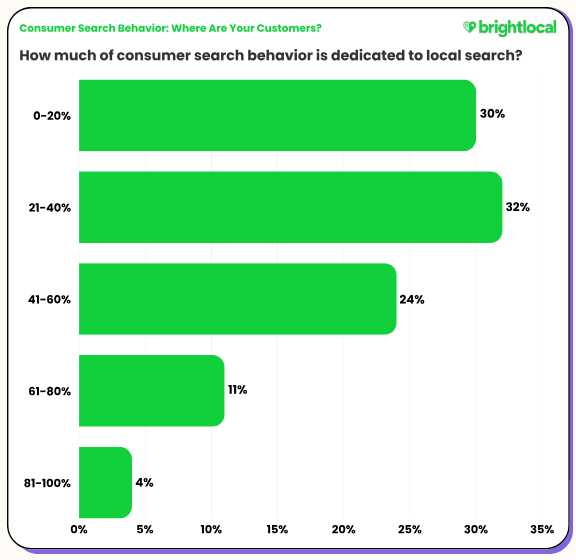
Research from BrightLocal shows that nearly a quarter of consumers estimate that 41% to 60% of their searches are tied to local intent. That makes location-based queries a large part of everyday search behaviour.
This is what makes local search different. You’re not trying to rank for one keyword. You’re trying to win the Google map pack in every zip code you serve.
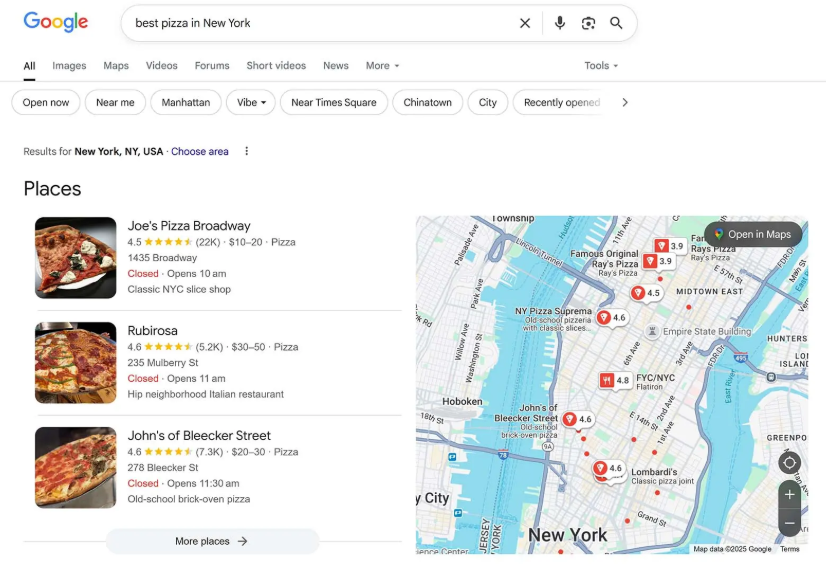
But managing multiple Google Business Profiles can be time-consuming. You need to manage reviews, update hours, and post photos for each site. If you do this manually, you’ll eventually fall behind in your competitor analysis.
The four pillars of local scalability
To scale successfully, you need a solid foundation. You need systems that enable repeatable success in every new market you enter.
Pillar #1
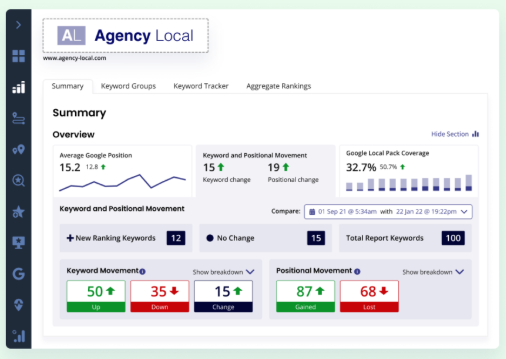
First, you need the right tools. Use an SEO tool like a local rank tracker to see all your local search results across the whole country. You’ll have everything in one simple dashboard, so you don’t get lost in the data.
Pillar #2
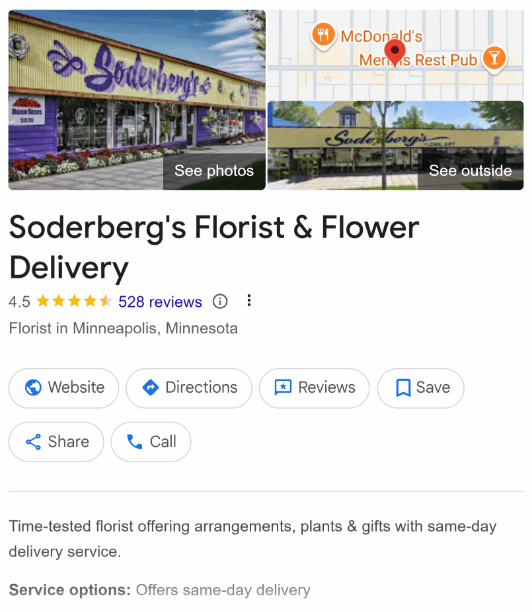
Processes are just as important as tools. You need a solid checklist for setting up a Google Business Profile that stays consistent every time. This helps you maintain high conversion rates for every new shop you open. If you don’t have a plan, you’ll forget the small things.
Pillar #3
Then there’s the people part. You need experts who really understand on-page SEO and off-page SEO strategies. Finding these pros is usually the hardest part for any growing company. You need someone who knows how to make a local SEO strategy actually work.
Pillar #4
Look at the numbers. Google Analytics and Google Search Console help you track your organic revenue for every single city. You can see the exact number of leads coming in. If you don’t have this, you’re flying blind.
The in-house model: Depth over velocity
Building an internal team is like building a custom house. It takes longer and costs more upfront. However, the result is something perfectly tailored to your specific needs and terms and conditions.
The pros of in-house teams
The biggest advantage is brand alignment. Your internal team knows your voice better than any outsider. They understand the nuances of your YMYL content (Your Money or Your Life) and how to maintain high security check standards on your web property.

They also have real-time access to your local managers. If a local contractor services branch changes its offerings, the SEO team is immediately notified. They can come back and adjust your ads or listings in minutes.
You can see this clearly in a law firm. An in-house team there knows exactly which legal terms are safe to use. They won’t make compliance mistakes because they’re part of the company. This deep knowledge is very hard for an outside agency to replicate.
The hiring bottleneck that limits the in-house scale
The downside is the recruitment bottleneck. It can take six months to find a senior expert for local search optimization. If you need to scale 5x, you have to hire a whole department.
In-house teams often suffer from tunnel vision. They only see your data. They don’t see the Google algorithm updates hitting other industries. This makes it harder to stay ahead of search engine rankings trends.
For instance, if your internal SEO is busy with a website audit, they might miss a new voice search optimization trend. They don’t have the “pattern recognition” that comes from seeing dozens of different accounts every day.
The agency model: Speed as a service
Agencies are built for speed. They have all the tools you need right now. When you hire an agency for local seo services, you’re buying a pre-built machine that’s already running.
Why agencies scale faster
Agencies like uSERP have ready-to-use tech stacks. Clutch rates them as a top link building company. This matters because they have the connections to handle high-authority link building right away. You don’t have to spend months trying to find these contacts on your own.
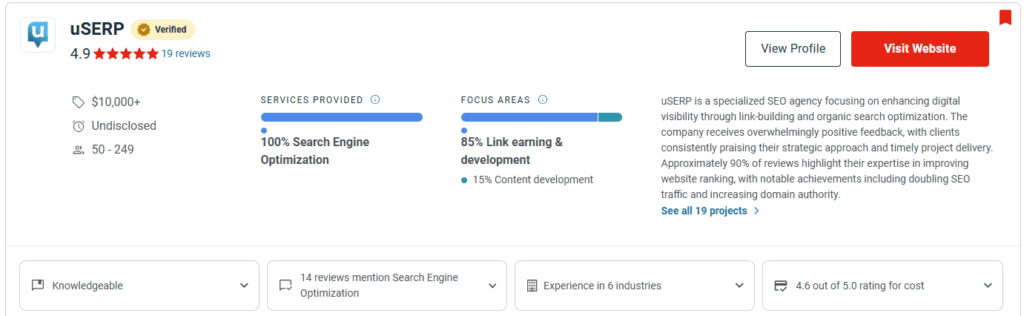
They also have many people ready to help. If you open 50 new spots next month, they just move their team to your account. Your local SEO strategy doesn’t stop while you wait for a job post to get hits. They have the staff to keep you moving forward.
Agencies also see Google algorithms changing in real time. They manage a lot of accounts, which makes it easy for them to spot a Google algorithm update before it hits your industry. This gives you a head start on your SERP optimization.
The trade-offs of the agency model
There’s always an “external gap.” The agency won’t know your business as well as you do on day one. You’ll need to spend time on onboarding. You’ll also need an internal person to check their work.
Coordination costs can add up. You have to attend meetings and review their local SEO audits. However, this is usually still cheaper than paying for five full-time salaries and benefits packages.
An agency might push a high-volume keyword research plan. But those words are a waste if they don’t generate strong customer relationships. You have to keep the agency focused on your real search intent. It takes a little work to keep everyone on the same page.
Comparing the time-to-value
Time is your most important asset. In local search engine optimization, being slow means losing market share. Your competitors are already grabbing the top spots in the search results.
The onboarding race
An agency can usually start within two to four weeks. They can run a website optimization check and start link building on day one. They don’t have to spend time learning how the tools work.
In contrast, hiring an in-house expert takes months. You have to interview, hire, and then train them. By the time they’re productive, your competitors have already improved their search engine rankings.
The planned playbook
Agencies bring a proven playbook to your office. They’ve done this before for hundreds of other clients. They know how to run local SEO campaigns and handle SERP optimization without making mistakes that could damage your brand’s authority.
Internal teams often have to write the playbook while they’re playing the game. This leads to a lot of inconsistency. You might have great local citations in one city, but another city is completely missing from your Google Maps results.
The hybrid solution
You don’t always have to choose just one. Many successful companies use a hybrid model. This gives you the best of both worlds: Internal strategy and external execution.
According to SimpleTexting, 42% of small businesses use a mix of in-house marketing and external agencies rather than relying on a single approach. And using both methods makes your company 2.5 times more likely to report marketing success.
In a hybrid setup, one in-house expert leads the local SEO services strategy and keeps content aligned with brand standards. The agency focuses on execution-heavy work like link building, technical SEO, and listings management.
This structure frees internal teams to stay focused on revenue-driving tasks while external specialists handle the operational load. For SaaS companies building a local content marketing plan, this approach often delivers stronger ROI tracking without overwhelming a small team.
In-house vs agency: Which option should you use for your local SEO strategy?
Whether you’re hiring someone in-house or working with an agency depends on your specific situation. There’s no “one size fits all” answer in local search optimization. You need to assess your goals and current resources.
Ask yourself these questions. Be honest about your capacity. It’s better to admit you need help now than to fail six months from now when your local rankings drop.
- How many locations are you adding? If it’s more than five a year, you probably need an agency.
- What’s your budget? A senior SEO specialist in the U.S. makes an average of $103,000 per year. Local SEO packages from an agency are often more flexible. (Source: Indeed).
- Do you have the tools? If you don’t want to manage a complex platform, let an agency do it.
- Is your industry moving fast? If there are frequent Google algorithm updates, you need the pattern recognition of an agency.
Choosing the best path for growth
If scalability is the main goal, agencies usually make more sense. The systems are already in place. Listing management, rank tracking, and repeatable processes don’t need to be built from scratch. That saves time when growth accelerates.
In-house teams work better when growth is slow and the product is highly technical. Deep brand knowledge matters more than speed in YMYL-heavy environments. Still, for most businesses, agencies offer a faster path to consistent visibility and stronger conversion performance.
Wrap up
Winning at local seo services is really a game of logistics. You have to get your systems right before you grow. Whether you keep it in-house or hire an agency, don’t let old methods hold you back. You need a local SEO strategy that moves as fast as your business.
A partner gives you the specialized help you need right now. This ensures your local rankings stay strong as you grow. Agencies can track your organic revenue without any hiring headaches. It’s the fastest way to win the Google map pack and boost your number of leads.
Are you ready to dive deeper into scaling your brand? We have plenty of resources to help you lead the market. Go ahead and explore more of our blog posts here at Codeless to master your growth. Learn how to turn every new search into a real lead capture win today.