



Remember when you just put keywords on a page and watched the traffic grow? That feels like a dream now. Today, the game is totally different. You ask a question, and a robot answers you first. It looks like organic SEO is dying. But the truth is actually much more exciting.
You can still find a way to win. This guide shows you how to scale website traffic without buying every visitor. We break down four pillars to keep you safe from Google updates, and you’ll learn how to own the answer on search engines.
Highlights
- Organic SEO is no longer about ranking pages. It’s about becoming a trusted source that AI systems and users rely on for answers.
- Information gain is the new competitive edge. Content that adds original insight, experience, or perspective is what earns visibility.
- Website authority now extends beyond backlinks. Brand mentions, real authors, and off-site credibility play a major role in how search engines evaluate trust.
- Technical readiness shouldn’t be ignored. Growth comes from what you publish and how clearly machines can understand it.
- The fastest-scaling teams use a human-in-the-loop model, pairing AI efficiency with human judgment to protect quality and credibility.
The shift to owning the answer
People no longer scroll through pages of results the way they used to. They ask a question and expect an answer right away. More often than not, that answer comes from an AI summary, not a traditional listing.
This doesn’t mean organic SEO is dead. But we’ve changed the way we find things.
In the past, winning meant ranking higher than other pages. Today, it means being trusted enough to be used as the source. If your content doesn’t add anything new, AI systems will ignore it.
This is where many sites fall behind. AI can already summarize common information. Repeating what’s already online no longer works. Content now has to offer something original or opinionated that improves the answer.
That means that modern organic SEO is about becoming the reference point. When someone asks a question, AI models look for the most reliable input. You want your content to be one of those inputs because it’s genuinely useful.
Pillar 1: Infrastructure and AI-readiness
Technical SEO has a key role.
If your site is slow, messy, or hard to read, it will not be prioritized. Not by Google. Not by AI systems. Machines now decide what gets processed first, and they’re designed to conserve resources.
That means your site must be easy to crawl, fast to load, and well-structured. If it’s not, it gets skipped.
Moving to Schema markup 2.0
Structured data used to be a simple add-on. You put a few tags in your code and hoped search engines would show rich results. That’s no longer enough. Schema markup now tells machines not just what your page is, but what it means.
AI systems depend on this. You need to tell them who wrote it, what expertise they have, and how the whole page connects to your brand and industry. That extra layer of meaning helps machines trust your content more.
For example, a tech company’s product page can use schema markup to clarify what it sells and who it serves. When implemented correctly, search engines can surface details like pricing ranges, availability, supported use cases, and delivery options directly in search engine results pages. That context makes the result more useful before a user even clicks.

Managing the llms.txt and robots protocol
We’ve moved past simple robots.txt files. Now, we use llms.txt to give specific instructions to AI crawlers like Gemini or Perplexity. This helps control how they summarize your blog posts.
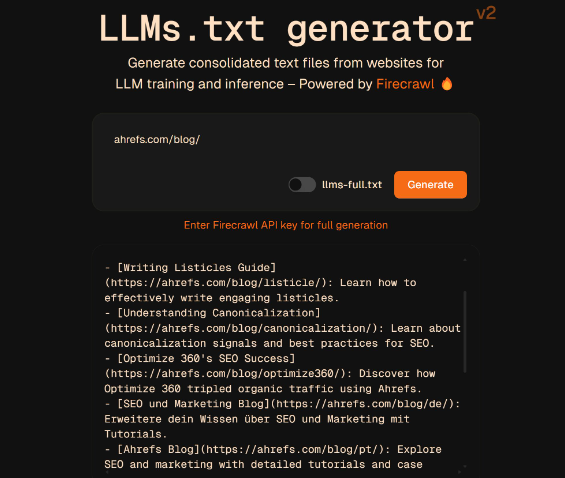
By being proactive, you can influence how your brand is cited in AI Overviews. You can suggest specific snippets or data points that you want the AI to highlight to users.
For example, an SEO company might publish a detailed benchmarking report. By using llms.txt, the team can guide AI crawlers toward the key findings and data summaries they want highlighted, while limiting access to supporting appendices. This increases the chances that AI summaries reference the main insight, not a half-explained data point.
XML sitemap prioritization and crawl efficiency
Search engines have limited time and resources. If your site has thousands of pages, not all of them will be crawled with the same attention. That means you have to help Google decide what to look at first.
Pages with original insights, updated data, or high information gain should be easy to find and quick to crawl. This is where a clean sitemap comes in. It tells search engines where your best work lives.
Think of a news site. If original reporting and opinion pieces are flagged and updated frequently, they get crawled faster. Older content takes a back seat. That focus protects authority and keeps high-value pages visible when it matters most.
Pillar 2: The content engine and information gain
A strong organic SEO strategy in 2026 begins with a solid foundation. Building a website that is fast, clear, and technically sound ensures your content can be crawled, understood, and ranked.
Technical efficiency supports site performance through page speed, mobile usability, and clean structure. Once that baseline is in place, long-term growth depends on content that delivers real information gain.
Moving beyond traditional keyword research
Keyword research based on volume alone no longer tells the full story. High-traffic terms are already well covered, and AI can summarize them instantly. Chasing those keywords usually leads to content that looks fine but adds nothing new.
What matters now is search intent.
Instead of asking what people search for, you ask why they search. You focus on the problems behind the query and the questions that still don’t have clear answers. That’s where information gain lives.
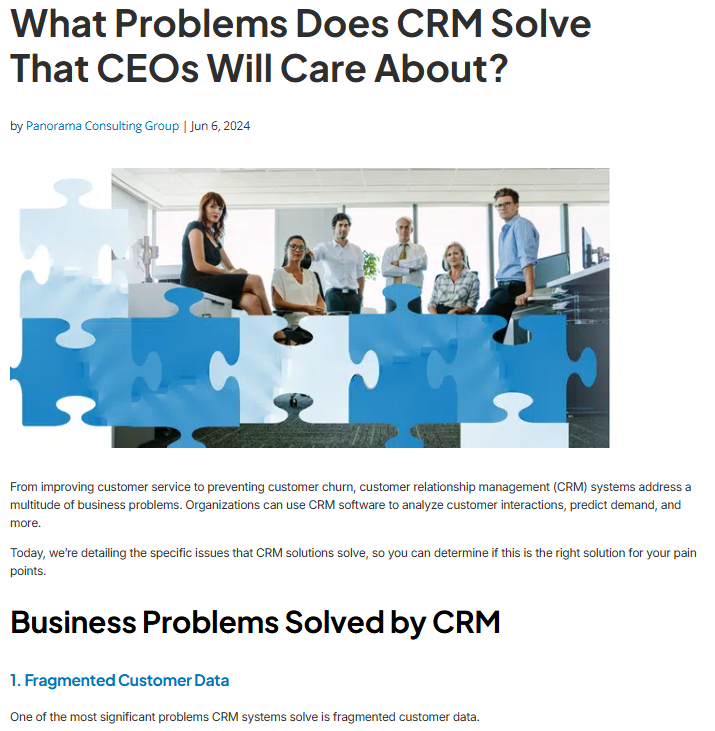
For example, writing about “best CRM software” rarely moves the needle. But explaining how a CRM solves a specific workflow problem for a specific team does. That depth’s harder to copy and easier to trust.
Winning the zero-click search
Search engine results now answer questions before users ever click. In fact, around 80% of search users say they rely on AI-generated summaries for at least 40% of their searches, according to Bain & Company. That shift has changed what visibility really means.
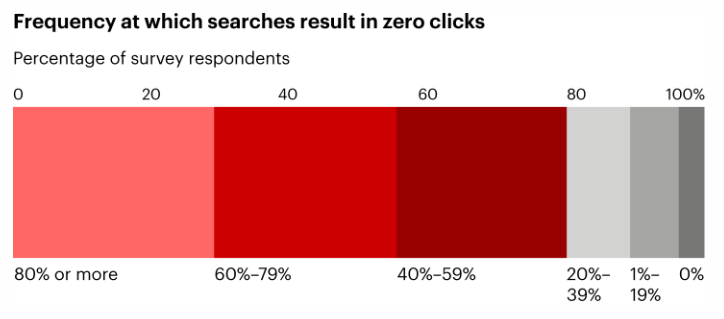
Pages that surface a clear response early are more likely to be cited in AI summaries and featured results. This builds authority even when users don’t click right away.
Some readers will leave after seeing the answer. That’s expected. And being the cited source creates familiarity and trust. Over time, that trust drives branded searches and higher-quality visits.
Think of a medical site answering a common first-aid question. A short, clear explanation of how to treat a minor burn earns immediate trust. When the same source offers a deeper recovery guide, users are far more likely to click and return.
Building topical authority with cluster models
Ranking today is about coverage.
Search engines look for signs that a site truly understands a topic. When your content answers not just one question, but every related question, your site becomes a reference point.
This is where cluster models work.
A cluster starts with one core page that defines the main topic. Supporting pages explore specific angles in more detail. Each page links naturally to the others, reinforcing relevance and context.
Over time, this structure builds trust. Search engines see consistency, expertise, and intent. Instead of competing page by page, you compete at the topic level.
For example, a site focused on local SEO for small businesses wouldn’t publish a single guide and stop. It can support that guide with focused content on business profiles, map visibility, reviews, and location signals. This is what turns content into authority.
Pillar 3: Authority engineering and digital PR
Authority no longer comes from link building alone.
As part of search engine optimization, off-page optimization has shifted into something closer to digital PR. What matters now is who talks about you, where those conversations happen, and whether they make sense in context.
Links still matter, but not all links carry the same weight. One mention in a trusted industry publication can signal more trust than dozens of low-quality placements.
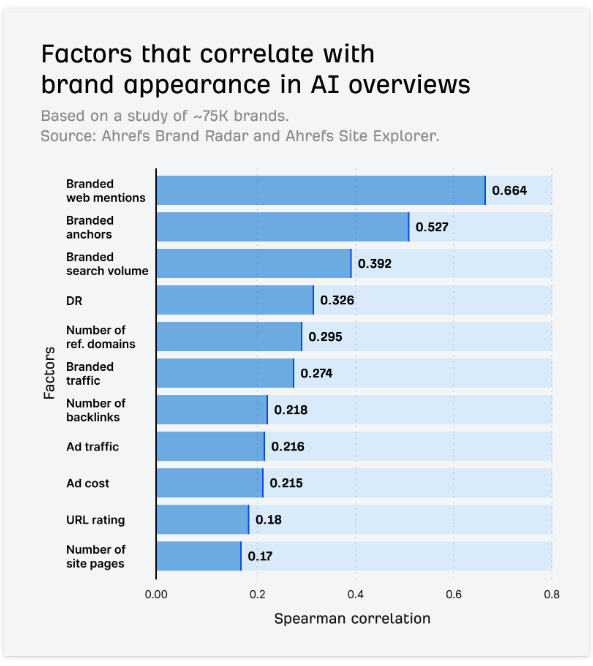
In fact, in an analysis of 75,000 brands, Ahrefs found that branded web mentions correlated most strongly with AI Overview visibility (0.664), far more than backlinks or domain authority. (This tells us one thing. If no one’s talking about your brand outside your site, AI systems may ignore you.)
E-E-A-T in the age of synthetic content
With so much AI content out there, “Experience” is the most important part of E-E-A-T.
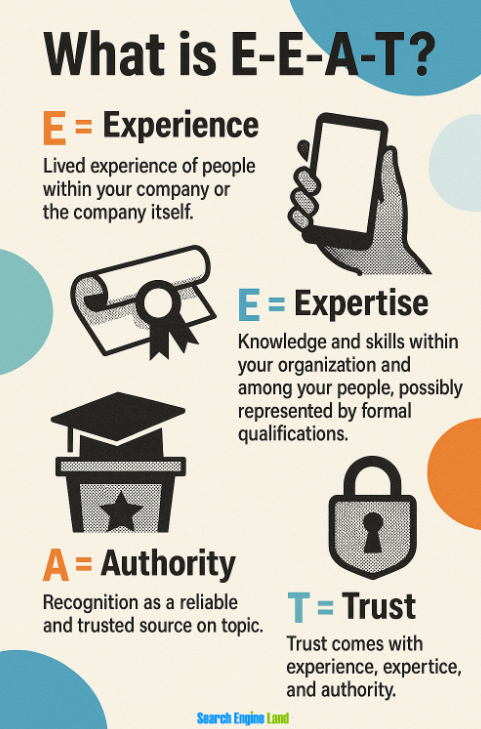
Search engine raters are looking for proof that a human actually did the work.That means firsthand insights, original examples, and details that don’t appear in generic summaries.
If you’re writing about page speed, don’t just quote best practices. Show a real result. If you’re publishing travel content, use your own photos and describe specific moments. These details signal authenticity in a way AI cannot replicate.
The author entity and the digital footprint
When it comes to content, the person behind it matters. Search engines want to know who wrote the article and whether that person has a real presence online. When an author is consistently associated with a topic, their content carries more weight.
An engineer who speaks at conferences and publishes technical work will outperform an anonymous byline. The same applies in finance, health, and any trust-driven space.
Brand mentions and the entity score
Links are no longer the only trust signal.
Search engines now pay attention to unlinked brand mentions across the web. When people discuss your brand on forums, blogs, or review platforms, it reinforces your relevance.
Strong reviews, active discussions, and consistent mentions all contribute to how authoritative your brand appears.
A local restaurant mentioned in food blogs and praised on Google Maps can dominate local results even with a simple website.

Pillar 4: Scaling with a human-in-the-loop model
You can’t scale content marketing manually anymore. And you can’t automate the entire process either.
We recommend using the human-in-the-loop approach. This involves using AI to handle repetitive, time-consuming tasks. Then, humans step in to review, shape, and refine the work so it remains meaningful and high-quality.
Efficiency vs authenticity in the workflow
AI is best used early in the process. It can surface patterns, pull data, and speed up research. This creates momentum and frees up time.
But the final voice has to come from a human.
Only a human can decide what matters and add context. That is where real information gain comes from. It’s also what users respond to.
For instance, an editorial team might use AI to scan hundreds of support tickets and product reviews to identify recurring questions. A human writer then turns those insights into a clear, opinionated guide that explains the issue from real experience.
Content refreshing as a growth lever
The content that ranked last year can quietly slip without warning. The searcher’s intent changes, and the data gets outdated.
Refreshing content is now considered part of your SEO strategy.
Teams that revisit key pages regularly stay visible longer. They update examples, validate claims, and realign pages with current expectations.
Let’s say your SaaS product’s comparison page once ranked well but isn’t getting many views. Instead of rewriting it from scratch, your team updates feature screenshots, refreshes use cases based on current customers, and removes outdated claims. The page regains visibility because it reflects how the product is actually used today.
Programmatic SEO for long-tail scaling
For businesses with large datasets, programmatic SEO is key to scaling. You can generate thousands of pages that answer specific, high-intent queries. It allows you to publish pages that answer very specific, high-intent queries users are already searching for.
The risk is thin content.
Programmatic pages only work when each one is genuinely useful. That means clear context, helpful details, and a smooth experience. Structured data helps search engines understand what makes each page distinct rather than duplicated.
Take a real estate site. It can generate pages for homes priced below a certain amount in a specific city. When those pages include local market data, maps, and filters, they become practical tools instead of filler content.
Wrap up
Today, organic search engine optimization is more complex than it used to be. But the upside is bigger. Success no longer comes from shortcuts or tactics designed to game the system. It comes from earning trust and becoming a source that both people and AI are willing to reference.
The framework is simple:
- Strong infrastructure creates the foundation.
- Information gain makes content worth reading.
- Authority turns visibility into credibility.
- Human judgment keeps everything grounded as you scale.
If you want to keep growing as search continues to change, focus on solving real problems better than anyone else. Stop writing for robots and start building a brand they cannot ignore. For more ideas on scaling organic growth, explore the latest posts on the Codeless blog.